
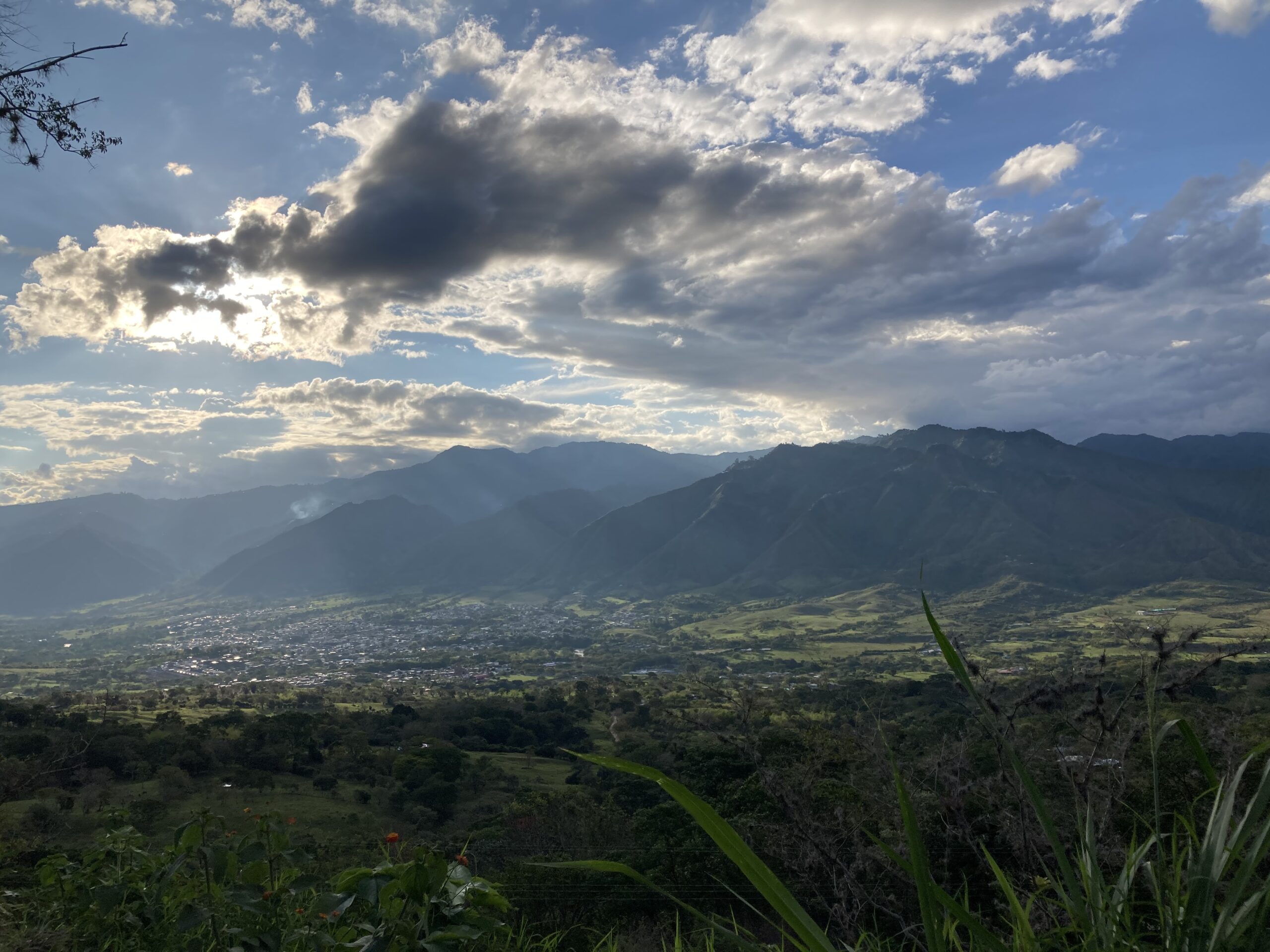
En conversación con un caficultor: Didier on the Effects of Climate Change on Coffee Production in Western Huila
“Todo cambia, todo se modifica.” Everything changes, everything gets modified.
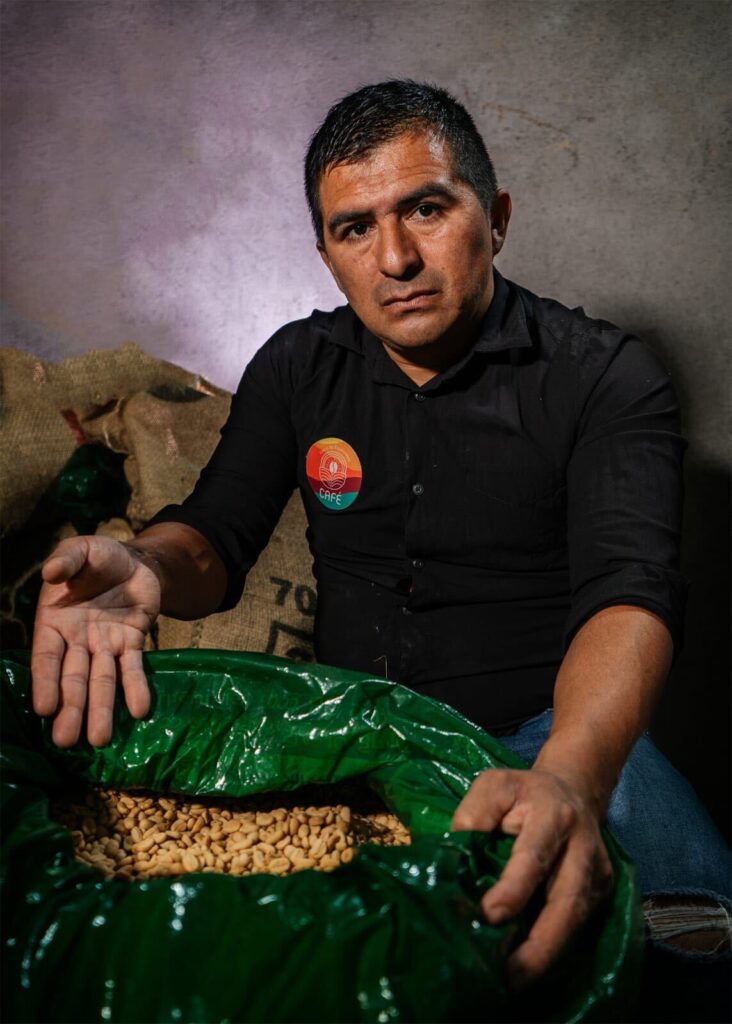
Didier Javier Pajoy Ico has grown coffee since 2008, after learning from his father how to cultivate it. I have the privilege of speaking with Don Didier a couple of times a month, as he is Osito’s regional buyer for La Plata and its surrounding municipalities – La Argentina, Paicol, and El Pital – in Western Huila on the northwest border of the department of Cauca. In addition to receiving coffee, analyzing it, and lastly organizing transport of parchment from the La Plata buying station and warehouse to Osito’s lab, headquarters, and dry mill in Garzón, Didier is a father, husband, and beloved community leader. He visits his peers’ fincas and helps them with processing during the principal harvest and secondary mitaca, crop management, soil health, and all coffee farming chores and challenges during the growing season. Didier also has his own locally sold roasted coffee brand. We often joke that we wish we could clone Didier because he is such a vital part of Osito Colombia’s infrastructure. He is the hardest-working person I know.
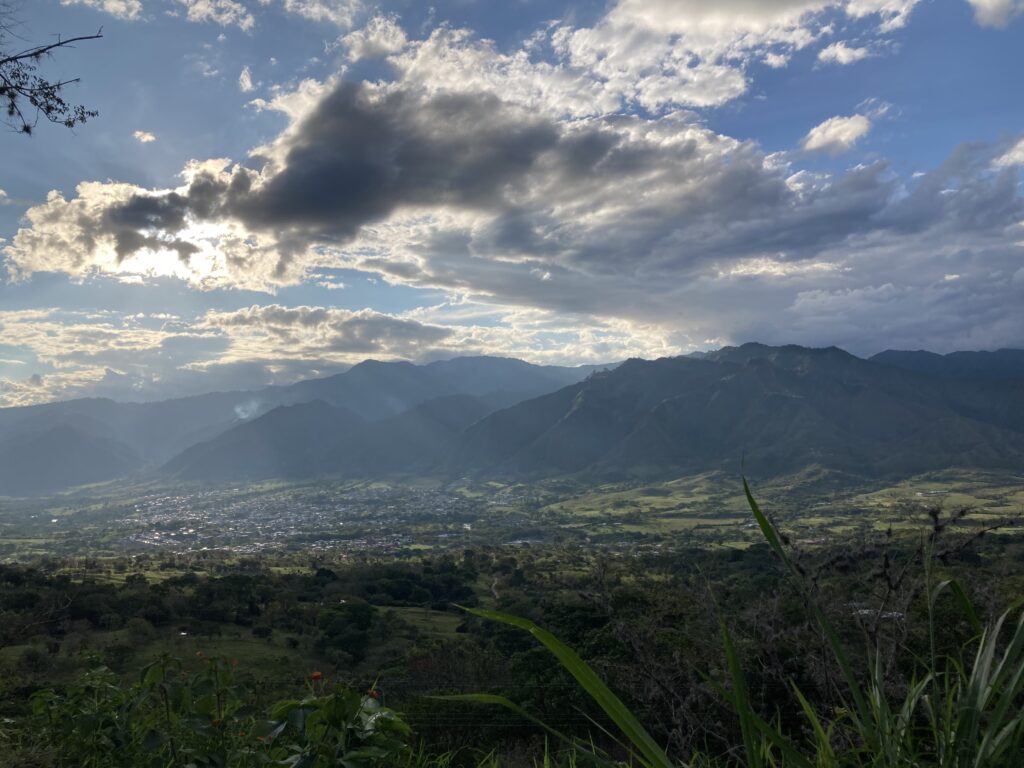
His hometown, La Plata, has been historically important for centuries: originally home to three indigenous groups in pre-Columbian times, later known for its silver reserves (hence its Spanish name) and the Colombian War for Independence against Spanish invaders in the early 1800s; and even today, as it connects Huila to Cauca and on to the Pacific, a key route for drug trafficking. Because of its strategic location along the central Andean ridgeline, La Plata has faced a precarious security situation for decades, with only brief periods of respite. In recent years, and to this day, it has not been safe for outsiders to visit. Didier told me that just last month, armed groups had been utilizing drone attacks and had recently placed explosives on public transport. This is the reality for many parts of Colombia.
Last August 8th, Didier was attacked on his way home from Garzón, right on the outskirts of La Plata. His motorcycle and cell phone, both crucial for his work, were stolen, and he was left seriously injured in the aftermath. He slowly recovered and returned to work a few weeks later, in time to serve on the Copa de Oro jury. In moments like these, when life’s precarity is so palpable, remember that the coffee we all consume is grown by families in parts of the world facing circumstances most of us in the North don’t think about. It’s easy to feel they don’t directly affect us, but we directly affect them through our consumption, our reliance on fossil fuels, and the politics of governments that care not about people, only about money and extraction.
“Ningún proceso es facil, Andrea”, Didier said to me last week when we spoke for a little over an hour about how climate change was affecting his community and his coffee. No process is easy.
“Todo ha cambiado, todo se modifica.” Everything has changed, everything has to be modified.
Before climate change, farmers could plan ahead and, for example, pinpoint when the rains would come, almost down to the week. Traditionally, coffee trees blossomed in August. Then, in the first week of September, the rains arrived. This did not happen this year nor last. In the lowlands, on the skirts of the Andes surrounding the municipal seat of La Plata, barely any rain fell. I saw this with my own eyes in nearby areas of Huila and Tolima in July. For the first time in nine years of working in the Colombian coffee countryside, it only rained once during a ten-day visit, when in the past one could reliably expect a daily rain shower. Currently, in more than 191 municipalities, hundreds of wildfires are burning hundreds of thousands of hectares of farmland and protected forest reserves.
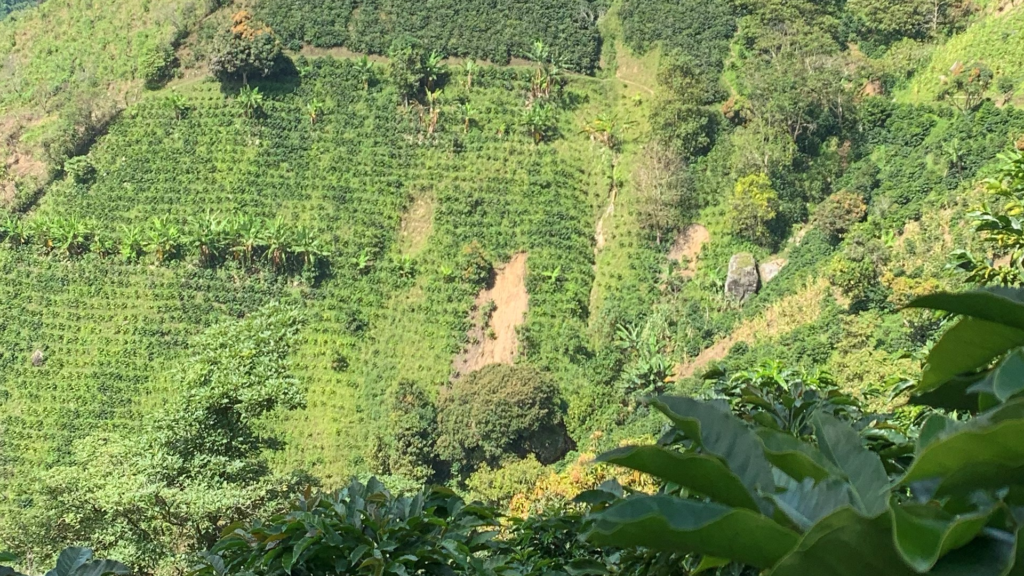
The lack of rain and access to water is pushing coffee farmers higher up the mountains, where, alternatively, too much rain at the wrong time destroys the cherries. Abandoning their farms at lower altitudes creates myriad problems. Farmers move up the slopes, where they clear-cut invasive Eucalyptus and pine forests to make room for coffee trees. This action, and the subsequent post-collection processing, pollutes the waterways that run down the mountains. In the highlands, temperature drops are also more drastic, and these changes can “burn the cherries”. When temperatures drop, they can freeze and break the cherry’s cellular structure; when temperatures rise again, the resulting ice crystals rehydrate the fruit, causing it to oxidize and shrivel, quickly turning dark brown — as if it were burned—and eventually fall off the tree. Due to the presence of fighting factions of armed groups involved in the international drug trade, the less densely populated and less accessible higher elevations are also more dangerous, and farmers are often required to pay fines to the groups to move coffee or even enter these areas, adding to costs of production.
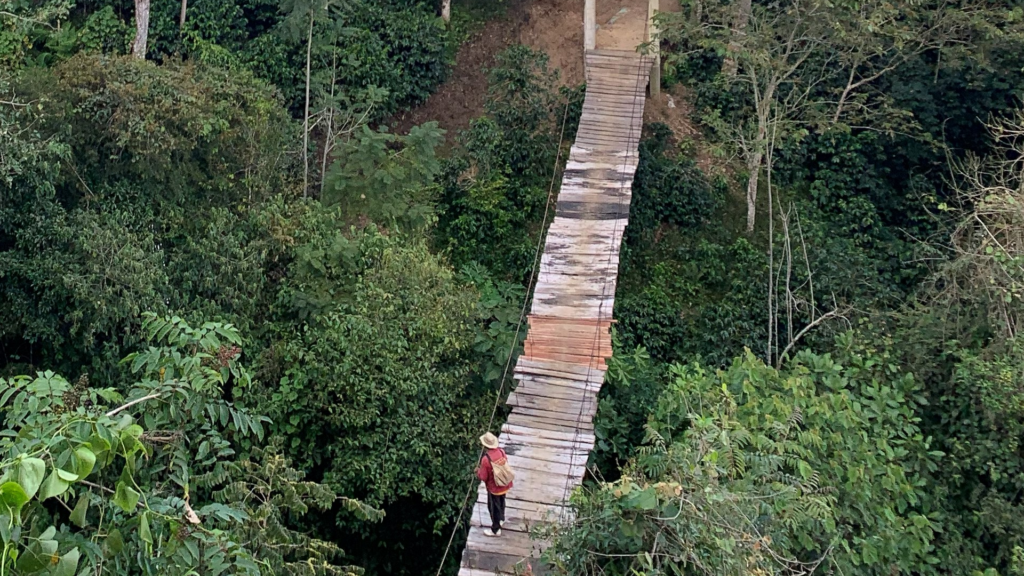
“Las labores agrícolas son diversas en las alturas”, Dider explained that agricultural tasks vary at higher altitudes. Growing coffee at 1,500 masl is very different from growing it at 1,800 masl, where his farm starts, and above. The trees become leafier and carry less cherry. “Menos plantas, menos café, menos sacos para exportar”: with fewer plants, there is less coffee, which means fewer exportable sacks.
When Didier’s father was growing coffee, his concerns were different. His father grew commercial coffee, sold it locally and to the FNC, and made a living. This is not possible nowadays. Didier has hosted international clients who come to buy coffee, but they buy only the highest quality and, more often than not, never return.
“No hay balance: si uno produce 5,000 kilos y solo vende 100 kilos, no es económicamente viable y uno necesita socios estratégicos. No ha sido fácil.” If a farmer produces 5,000 kilograms of coffee but sells only 100, it is not economically viable. Without strategic partners who can steadily increase the volumes they purchase from each farmer year to year, it is extremely hard to make a dignified living.
Didier has experienced this firsthand with exporters. In 2016, he received a contract for 2,000 kilos of coffee. He delivered it, but the exporter bought only half, the higher-scoring lot, “due to logistical reasons”. He had workers to pay, who worked entirely on an informal cash-in-hand basis, and whole families who relied on him to eat, so he quickly had to sell the remaining coffee locally at a huge loss of about 6 million Colombian pesos. This is when he realized he needed several lines of business, or entradas. That same exporter soon pivoted to buy cheaper coffee in the department of Nariño.
Currently, Didier sells 60% of his coffee locally and to multinational companies, and the rest to Osito. Fortunately, local coffee consumption has grown exponentially over the last five years, allowing him and his family to sell their roasted coffee to the new crop of cafés in La Plata. Before, La Plata had one cafeteria and many small merchants who sold coffee from thermoses in the town squares and streets. Now more than a dozen businesses operate, many buying specialty-grade coffee at competitive prices.
But Didier worries that the younger generation is less interested in continuing the labor-intensive agricultural work he was raised on. He personally knows young men who have left Colombia to go fight in Ukraine. “Esta generación no quiere saber de fincas; quiere hacerse famoso en TikTok e ir a Ucrania a luchar para ganar 15 millones.” This generation doesn’t want anything to do with farm work; they want to get famous on TikTok and go fight in Ukraine for 15 million pesos, the equivalent of $4,700 USD, or just under a third of a year’s wages for someone earning minimum wage and working a 42-hour work week.
Didier learned a lot from his accident. Until last year, he worked nonstop, taking Sundays off only sometimes, and more often working seven days a week, especially during harvest seasons. Coffee growers worldwide share this schedule. Now, he says, he steals fleeting moments throughout the workday to sit down and drink his coffee, grateful to be alive. Didier has a very serious resting face, but he smiles easily with friends. With a big smile and a chuckle, he told me he’s giving himself the time and space to keep studying all things coffee, and that he feels like he is getting a master’s or a doctorate in coffee.
“Profe,” I asked, using the short form for professor, an honorific often used in Colombia for people who have taught and guided you, “y que podemos hacer?” What can we do? What has to be done? I followed up by asking how the reforestation pilot program Osito Colombia has begun across Huila was going. “Bien,” he said. Agroforestry is maybe the most important solution right now.
By introducing native species- trees that help lower temperatures and bring nutrients from deep in the soil back up to the coffee trees, among other things- production costs will decrease. Farmers will depend less on and spend less on synthetic fertilizers and expensive organic inputs. They will also need to prune less. But this long-term solution requires investment and highly skilled labor. The native tree saplings Osito Colombia provides take more than five years to start helping each farm’s varied coffee ecosystems.
Without the strategic partnerships Didier mentioned among coffee growers, exporters, importers, roasters, and end consumers, coffee faces a future of quality degradation but, more importantly, will continue to perpetuate inequitable pricing structures that directly disenfranchise the most crucial players in the web of supply: the farmers. This is the inherent result of neoliberal trade liberalization and is also highly affected by climate change. We have to do better, and we can, but only if we work collaboratively.
Much of what Don Didier shared with me was sadly unsurprising, but some of it was downright mind-blowing. One thing he said that really stayed with me, and that I want to reiterate and leave you with as you drink your next cup of coffee, is: “Menos plantas, menos café, menos sacos para exportar”. Fewer producing trees mean fewer sacks of coffee for export. If farmers can’t make a living on exportable volumes alone, they need better, more reliable pay. Climate change is now an indisputable cost of production, even outside of the big C market swings that respond to global shifts. True relationship-driven buying means working together through open communication, mutual respect, and a commitment to exponential growth with coffee farmers in producing countries from harvest to harvest; it means moving away from the tendency to equate rigid cup scoring with a coffee’s inherent value or with a specific pricing structure. By using a more holistic approach to what may, on the surface, seem like just a transactional relationship, and redefining what quality means to all of us, we can do better, together.
By Andrea Brito Núñez